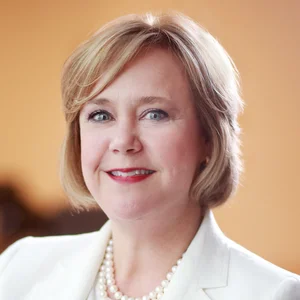
States at the Wheel: Angela Antonelli on What’s Hot, What’s Complicated, and What’s Coming for Auto-IRA Programs
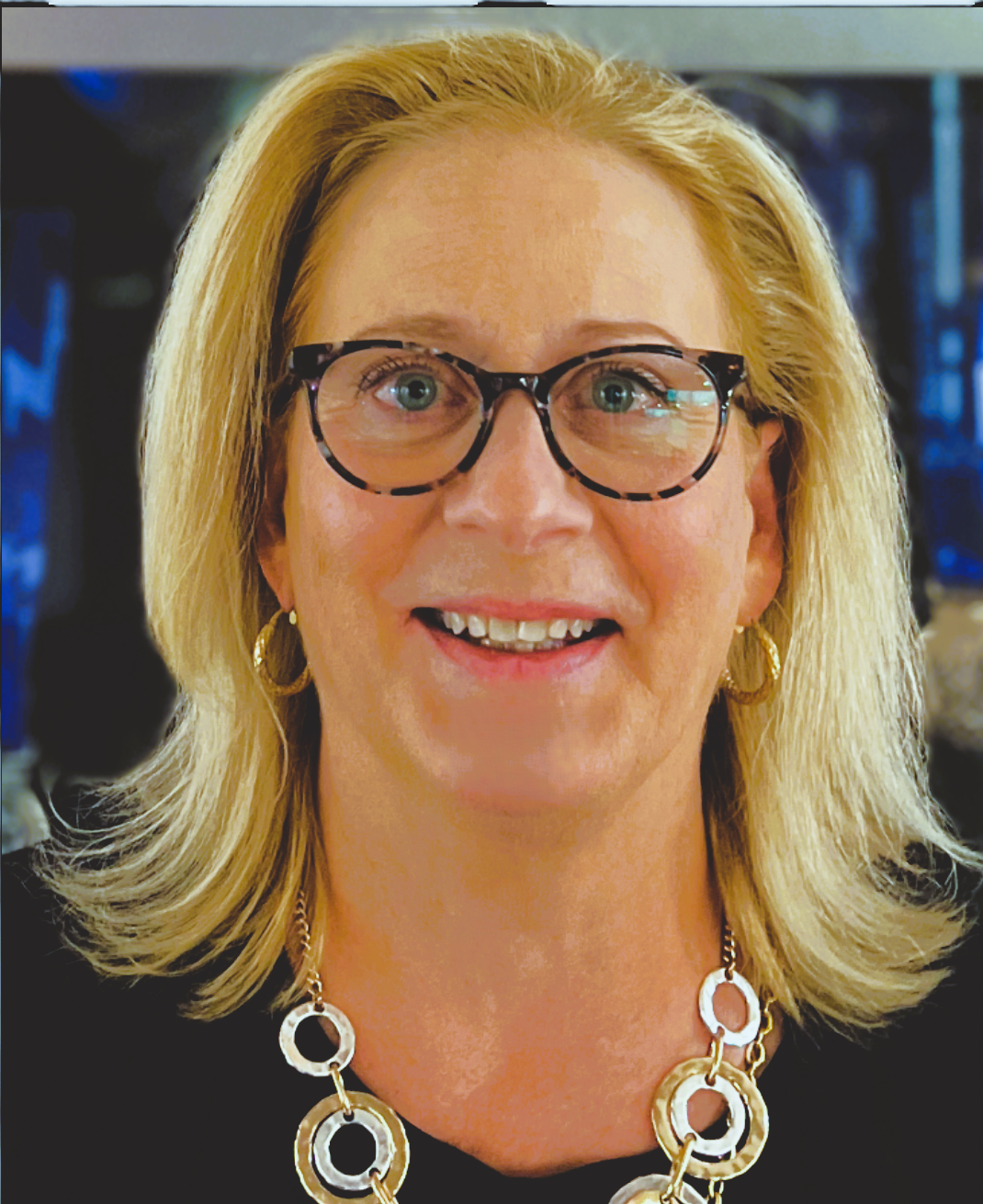
Angela M. Antonelli, Research Professor and the Executive Director of the Center for Retirement Initiatives (CRI) at Georgetown University’s McCourt School of Public Policy
Angela M. Antonelli is a Research Professor and the Executive Director of the Center for Retirement Initiatives (CRI) at Georgetown University’s McCourt School of Public Policy. For more than a dozen years, she has worked closely with policymakers, states, and stakeholders to expand access to retirement savings and improve outcomes for private sector workers. We recently sat down with Angela for a wide-ranging conversation following CRI’s annual State-Facilitated Retirement Savings Program Network (SRSPN) gathering — a three-day gathering held in late January 2026 at the University of Miami. The agenda was packed, and Angela’s perspective on what’s moving, what’s complicated, and what’s coming is as prescient as ever.
From the SRSPN Floor: The Hottest Topics of 2026
The 2026 SRSPN conference ran for three days — a reflection, Angela notes, of how much ground there is to cover and the progress of state programs. “There’s no shortage of topics for state programs and their future,” she said. Here’s what dominated the conversation.
Financial Health and the Broader Picture of Well-Being
A consistent theme was the opportunity — and responsibility — for state programs to address not just retirement savings, but financial health more broadly. The workers these programs serve typically lack access to financial advice and good financial information, and states are asking how they can better engage external partners to help bridge that gap.
Angela describes a growing recognition that retirement savings doesn’t exist in isolation: “How retirement savings fits into the bigger picture” is the right frame. For low- and moderate-income workers especially, that means thinking about financial education, financial information, and the full arc of financial well-being over a lifetime.
Reaching Gig and Independent Workers
The gig economy question is front and center. How do state programs — built primarily around the employer-employee relationship — continue to reach a broader population, notably independent and gig workers? Angela notes that discussions about how to provide benefits more broadly to this population are growing, and that retirement savings is one piece of a larger ecosystem of financial well-being that states are beginning to contemplate.
State Auto IRA programs, she points out, “can certainly support” gig workers as states consider new ways to allow access to benefits for that population. Whether that support is best structured at the state or federal level is an open question — one that cuts across retirement, health, and other benefit domains.
Data, Analytics, and Smarter Program Management
As these programs mature, the conversation is shifting toward how to manage them smarter. Angela points to data analytics, data tools, and program dashboards as increasingly important tools for setting benchmarks, monitoring performance, and driving greater operational efficiency. “The use of data,” she says, “will become more compelling and more necessary to help guide smarter program management.”
Emergency Savings: Still Hot, Still Essential
The intersection of emergency savings and retirement savings remains a top-of-mind topic. Angela cites strong evidence that short-term liquidity is protective of long-term retirement savings: workers who have access to emergency savings “definitely feel more financially secure, are more likely to save for retirement, and preserve those savings for retirement.” States are actively considering how to structure emergency savings as part of a broader strategy for supporting overall financial well-being.
Trump Accounts, the Saver’s Match, and the Federal-State Nexus
One of the most discussion-generating topics at the conference was the emergence of Trump Accounts — now frequently referred to as “530A accounts” — and their relationship to the Saver’s Match and states’ Auto IRA infrastructures. Angela is direct: “The federal government would really benefit from taking advantage of those infrastructures.”
States have built out savings infrastructure through ABLE programs, 529 plans, and now the state Auto IRA programs, and they are “encouraging of the dialogue” with the federal government on implementation. The challenge, she notes, is the same one facing state programs: reaching low- and moderate-income workers.
On the Saver’s Match, Angela is clear that the relationship needs to be two-directional. The federal government is looking to states to help reach the target population, but states have their own asks — particularly around implementation streamlining, including the ongoing complication of matching contributions going into a Roth account when the original savings were also made in a Roth. “It really is a two-way street,” Angela says.
“State savings programs are an existing infrastructure that also reaches low- and moderate-income workers. The federal government should take advantage of that.”
Universal Access: Where Does Federal Fit?
With 20 state programs enacted — and 17 fully open to all eligible employers and workers as of early 2026 — the landscape has shifted dramatically. New York’s statewide implementation is now underway, and several states are approaching early levels of full rollout. Against that backdrop, the question of how federal universal access proposals fit alongside state momentum is very much live.
Angela’s read on the federal government’s role in helping to close the access gap? States are most likely to want a framework that establishes a federal standard while preserving the role of state programs and private providers that meet those standards. One example of this is the Neal Automatic IRA Act concept — which would require employers with more than 10 employees that don’t offer a plan to automatically enroll workers in IRAs or other contribution plans, with state programs explicitly able to satisfy the requirement.
The big open question, she says, is whether there’s a role for any kind of federal public savings option — beyond setting the framework. “Is there some kind of scenario with some population of workers that they would be using a federal savings option?” Perhaps for independent gig workers, but how it would work needs to carefully thought through. She notes that there appears to be broad industry consensus that any federal solution should support and enhance our existing private retirement system.
On the prospects for legislative action, Angela is measured. “There’s probably not going to be a lot of legislative action” before the 2026 midterms, after which the makeup of Congress will help guide what’s possible. Any near-term retirement reform is more likely to look like “cleanup” — a SECURE 3.0 type of modest technical package.
Meanwhile, Angela expects more states to adopt programs regardless: “I’m definitely optimistic that we will see more state programs adopted.” The political calculus is interesting — even more conservative states increasingly see the success: growth in funded accounts and assets and the positive impact on private plan providers. They also want their residents to be able to take advantage of the Saver’s Match, and states with programs are better positioned to facilitate this. Finally, she notes, it is possible that the prospect of a federal standard becomes its own incentive for states to adopt their own program.
What Angela Likes — and What Keeps Her Up at Night
We asked Angela to step back and assess: with more than 12 years in this work, what does she like about where things are headed, and what concerns or opportunities does she see?
On the optimistic side, Angela sees a movement that has generated genuine spillover effects — from the state programs themselves to the broader national conversation about savings and wealth building. She points to the rise of Trump accounts and the growing emergency savings conversation as areas where state program advocacy has helped shift the national focus toward “helping families become more financially secure, to build wealth, to level that playing field, to reduce income inequality.”
She also points to the data showing that state Auto IRA programs have induced new private-sector retirement plan formation. Research from Georgetown’s CRI has found that states requiring employers to facilitate workplace savings have induced at least 30,000 firms in just four of the program states to establish retirement plans — a market development benefit that complements direct program participation.
The budgetary benefits, long a consideration for state leaders, are increasingly visible: workers who save for retirement are more likely to be less dependent on safety net programs later in life, more able to delay Social Security claiming, and in a position to supplement their income in retirement. Angela also flags asset tests — “archaic” provisions that can penalize low-income savers by disqualifying them from benefits when they accumulate even modest savings — as a federal policy issue that needs revisiting.
“A lot of reforms can take decades to come to fruition. What state programs have helped to propel — in just the past decade — is spectacular.””
On the concern side, Angela is watching carefully for what she calls “interference”: federal or policy actions that undermine state programs or divert retirement savings toward short-term uses. The mention of tapping 401(k)s for housing down payments — which, she notes, “generally didn’t go over well upon consideration” — is the kind of tension she’s attuned to. The core question is whether policy is actually supporting long-term retirement savings, or inadvertently working against it by prioritizing short-term liquidity.
That said, she’s clear-eyed about the opportunity: “A lot of reforms can take decades to come to fruition. What state programs have helped to propel – in just the past decade – is spectacular.” David John and Mark Iwry wrote the paper on Auto IRAs 20 years ago, and the first state programs were enacted in 2015. The fact that state programs are now holding $2.9 billion in total assets and almost than 1.2 million funded accounts — and driving conversation at the federal level — is, in her view, remarkable.
We closed our conversation by noting that the states have, as we put it, “put a brick on the accelerator.” Angela’s version: “The states have put that foot on the gas pedal towards financial security, and we’re grateful for it, and we’re optimistic they will continue to do that as we go forward. And we hope that the federal government recognizes this and works in partnership and not at cross purposes to it.”
Hard to say it better than that.
Angela M. Antonelli is Executive Director of the Georgetown University Center for Retirement Initiatives. The CRI’s SRSPN network page tracks annual conference programming and state program developments. State program data, including asset totals and funded account counts, is updated regularly at cri.georgetown.edu/states. The Neal Automatic IRA Act of 2025 can be found at neal.house.gov. Massena Associates publishes the Retirement Security Matters newsletter at massenaassociates.com.