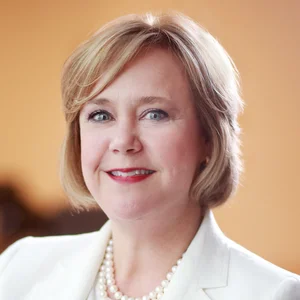
Small State, Big Vision: Becky Wasserman on Building Vermont Saves—How Vermont's inaugural executive director is making retirement security accessible to more than 80,000 workers
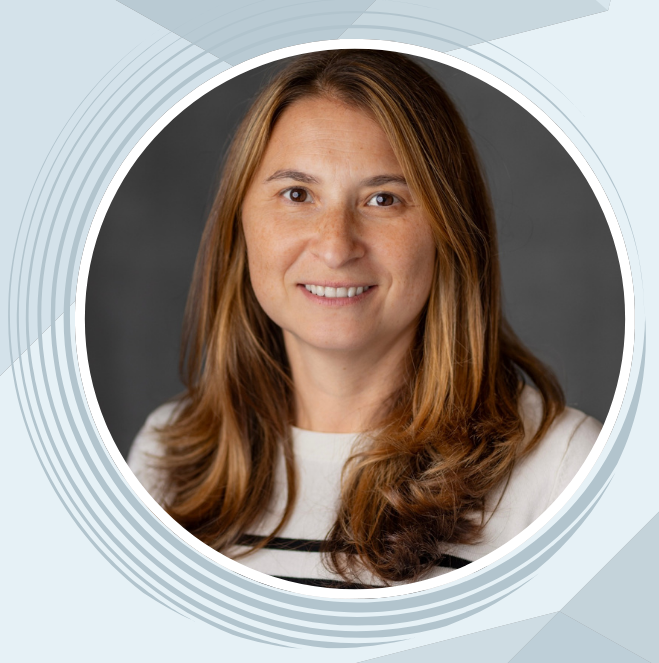
Rebecca (Becky) Wasserman, Executive Director, Vermont Saves
Introduction
Vermont Saves launched in December 2024, making it one of the newest state-facilitated retirement savings programs in the nation. The automatic enrollment Roth IRA program addresses a critical gap: approximately 88,000 Vermonters who lack access to workplace retirement savings. What makes Vermont's story particularly compelling is both the speed of its launch and its innovative approach to overcoming the challenges faced by small states.
At the helm of this initiative is Rebecca (Becky) Wasserman, the program's inaugural Executive Director, working within Vermont State Treasurer Mike Pieciak's office. A graduate of the University of Pennsylvania with advanced degrees from the London School of Economics and Brooklyn Law School, Wasserman brings experience from her previous role as legislative counsel in Vermont's General Assembly. Her appointment in 2023 marked the beginning of an ambitious effort to establish Vermont as a model for how smaller states can efficiently deliver retirement security to their citizens.
Through its partnership with Colorado in the Partnership for a Dignified Retirement consortium, Vermont has positioned itself to serve workers who have been historically left out of the retirement savings equation—those employed by small businesses that cannot afford to sponsor traditional 401(k) plans. In this conversation, Wasserman shares insights from Vermont's first year of implementation, revealing both the triumphs and the practical challenges of bringing retirement savings to Main Street.
Becky – thank you for joining us! Vermont is one of the newest states to stand up a retirement savings program. At first Vermont considered standing up a MEP, but ultimately transitioned to the Auto IRA approach.
Becky Wasserman: I was not part of the treasurer's office when the initial approach to have a multiple employer plan was being worked on, but I do think that one of the challenges we had with that, and also as we thought about this program, was just that we have a very small population. On our own, it is difficult to launch this type of program where we can be self-sustaining quickly, because we have only about 650,000 people in the entire state. We're much smaller than some of the other states that have these programs.
With that in mind, what's distinctive about Vermont's approach, both in how you've structured the program and how you are bringing employers and workers on board?
When we first got the legislation passed by the legislature, we thought it was really important to try to partner with another state. That was one of the first things we did—researching partnerships to see how that would impact our ability to launch a program. We ended up partnering with Colorado and joining the Partnership for Dignified Retirement.
Because we're part of that partnership, we do have to mirror a lot of the way our program is designed to the partnership’s overall design. And, I think we've benefited so much from having the efficiency and resources of being part of that partnership that, as a small state, we would not be able to achieve on our own.
One thing that’s distinctive about Vermont is that our Treasurer is the sole fiduciary for Vermont Saves. We don't have a statutory board as most of the other programs do. In our case this may make us lighter and a little more efficient. At the same time, input is important.
In the first year of planning and prior to launching the program, the Treasurer created a limited-duration advisory board to help provide feedback and recommendations about launching the program. That board was made up of a number of in-state HR and payroll specialists, and business owners of all sorts of sizes and types. We wanted to get feedback on how this type of program would impact those employers. The board has now concluded its work.
We want to note that your advisory board was quite diverse—everyone from the Trust Company of Vermont to Global Village Foods, U.S. Sherpa, Blue Cross Blue Shield of Vermont. We imagine that was super helpful.
Yes, we were intentional about getting a lot of different perspectives and voices. I think every area of Vermont is different, and we really wanted to make sure that we were thinking about the program design in a way that took into account those differences and how it impacts different industries.
It’s also the case that our treasurer happens to be very involved in our outreach efforts. Treasurer Pieciak is often traveling around the state, talking about Vermont Saves, having Vermont Saves events, meeting with employers and employees that have enrolled. His personal involvement at that level has been maybe unique, and very important here.
The last thing I would highlight, just because we're in the middle of this right now, is that we are looking to lower our employee threshold from five to two. As far as I am aware, we are the only state program that has our employee threshold in the rulemaking process versus the legislative process. That gives us a different mechanism for making those sorts of decisions about the number of employees that can make an employer eligible in comparison to other states. [At present, Vermont Saves is generally applicable to employers with five or more employees who do not offer a plan].
In the rulemaking process, you are able to involve the public as needed, but you don't have to involve the legislature. You probably have a little more flexibility to do things on a timeline that matches your needs.
Yes, we can respond more flexibly. For example, we’re also preparing to remove the minimum hourly requirement we had for part-time, seasonal, and temporary employees. We got feedback from employers that it was confusing for them to figure it out, and they were ending up not enrolling employees as a result. By removing it and just making it clearer, we can quickly make the program better and even easier for employers to use.
From Policy to Practice: Implementation Lessons
Implementation is where the real work happens. Can you share some of your early lessons?
Positively, it has been really surprising hearing directly from both employers and savers about how much Vermont Saves impacts them. We’ve received comments like, "I never thought it was possible for me to save for retirement," and from someone who worked for an organization for many years that it made them feel more like they had a ‘real job’ because now they get to save for retirement through that job.
Another employer told us, "I've been wanting to offer something like this, but I just couldn't afford it." That's been really wonderful to see—the direct impact on a person's life. These are great things that state government can sometimes offer. Great programs for people that impact them in that way.
“I’ve had people say, ‘I never thought it was possible for me to save for retirement.’ Seeing that direct impact on a person’s life—that’s what makes this work so meaningful.”
On the other hand, when you launch a statewide program there are also things you may not have thought of in terms of how people are receiving the communication and outreach you are doing.
We definitely got feedback about challenges that people had with receiving communications about the program by email or needing to log into a portal to take an action.
Interestingly, we heard from some folks worried about scams and wanting to know how they could verify that our communication was legitimately from a state program and the state Treasurer’s office. That is a lesson that not everything works well for everybody, and we've been working on ways to tune our outreach and meet people where they are.
What are some of the things you're thinking about?
For starters, we put a banner on the Vermont Saves website to confirm the association with the Treasurer's office. This link is important. We had some initial program communication that came from a domain name not associated with our office. So, we added a notice on the Vermont State Treasurer's homepage to confirm, "If you received an email from this domain name, it is real."
Authenticity and authority matter. Next year, for any remaining unregistered employers, our plan is to send a letter directly from our office so that they see the treasurer's logo and have the benefit of receiving an official letter in the mail from the Treasurer’s office.
Engaging Employers in the Green Mountain State
You've commented on some of the responses from employers so far. How else are you thinking about employer engagement?
We're seeing in Vermont—and this is part of the reason why we want to lower our threshold—that we have a lot of small businesses with less than five employees.
And, many of our small employers have limited professional services support. They’re often primarily served by a CPA, bookkeeper, or tax practitioner. They rely on those folks to tell them what their business compliance requirements are.
For this reason, we’re engaging more with our CPA Association, our tax practitioner Association, and others to make sure they are well informed about Vermont Saves, and that they're telling their clients about the program and related requirements for covered employers. When employers hear it from their accountants and tax professionals, they know it's real.
One way we do this: I've been presenting at the University of Vermont's continuing education tax school. Last week I presented in their Burlington location, and on Wednesday I'm going to Killington. This gives us a chance to reach a whole bunch of tax practitioners who prepare most of the tax returns in Vermont, so that they know to tell their employers.
We're thinking creatively about how to reach the employer population that might not have an HR person or other internal expert to ensure they get good support to make the program available.
Along the way, you’re giving insiders the chance to talk with you in person, and to gain good knowledge about the program and how it works. That must make your professionals even more comfortable.
Yes, and along those lines, you know we're a very small office. It's really primarily me interacting with people, but I also feel we need to be very available to people for them to just call me and say, "I have a question."
“In Vermont, everyone knows someone somehow. People feel like they can just call a government office and someone’s going to pick up the phone. We’re trying to be accessible in that way—there’s no phone tree before you can reach me.”
There's definitely something unique about Vermont. People here feel like their government is very accessible to them, mostly because they probably know somebody working in government. Everyone knows someone somehow! When Vermonters call a government office, they expect that someone will pick up the phone and answer their question.
Very personal. You get to balance the challenge of a small state and team with the opportunity that people do know each other, and there's a level of trust that's a little different because of that close knowledge that enables you to get to folks faster.
It’s true. Because we're a small state and I worked in other capacities in state government, I know a lot of state government employees working in different departments and agencies.
It helps! We're working to collaborate with our tax department, our Department of Aging and Independent Living, our Department of Children and Families. They're all willing to put something on their website, send out things in their newsletters. I think people are happy to collaborate here in different departments if it's helping their constituents.
One thing that we did that I was really excited about was partnering with an organization called the Vermont Language Justice Project. They make videos of government programs or anything—it could be how to take money out of an ATM—and it's aimed at Vermont's immigrant communities. There are 18 of the most common languages in Vermont, plus ASL, and they copy that video with real interpreters into each of those languages. Then they send them out through channels like WhatsApp, through their network of people who speak that language, to those community members. That was really exciting because I thought that was a great way to try to get more non-English speaking people in Vermont to hear about the program.
We shared this with Maine, and they did something similar for the MERIT program.
The collaboration among the states is one of the things that makes this a fun space to work in.
Looking Ahead: Integration and Innovation
Becky, what do you see next for the program over the next 12 to 18 months, and how will you know where you're on track and where you might want to spend more time? We also want your hot tips for other states working on these programs.
In our office, Vermont Saves is one of the programs in our Economic Empowerment Division. In general, all of our initiatives work to address economic security for Vermonters.
We work hard to find ways for all our initiatives to intersect. For example, another program I'm working on is a baby bonds pilot. We think about it this way: from birth to retirement, we're working on ways to address financial security for Vermonters. Part of our long-term strategy is looking at how all these programs can help people in that way, as part of the mission of this division.
We are just now hiring a communications manager for our division, which I'm really excited about. With someone dedicated to that work I think we can do a lot more with our outreach in the next year and beyond. This can include going more to counties, doing more grassroots outreach, and doing more on social media.
Can we do more? Provider Vestwell recently became the new program administrator for our 529 plan as well, which is not in the treasurer's office. So now they have the 529, the ABLE plan, and Vermont Saves. I think it would be great to think about ways we could develop efficiencies and public-facing resource sharing with all those programs now that they're all with Vestwell. Theoretically, if you had an account with all three of those programs, you could log into one portal and see all your accounts—have a dashboard view.
That feels like a hot tip to us. Oftentimes governmental programs are not well knitted together, and as a user you have to go to a range of places to see the whole picture.
Yes, making things easier for people is always better.
You’re doing terrific work in Vermont, Becky. Thank you for sharing your journey and insights with us. And, much success to you and your fellow Vermonters in the coming year!
About Vermont Saves
Vermont Saves is housed in the Office of the State Treasurer and requires all employers with five or more employees to register unless they already offer a qualified workplace retirement program. The program provides automatic enrollment into Roth IRAs with a default savings rate of 5% of gross pay, with automatic annual increases of 1% up to a maximum of 8%. Employees can customize their contribution amounts, opt out at any time, or re-enroll whenever they're ready. The accounts are portable and follow employees as they change jobs.
For more information, visit vtsaves.vermont.gov and vermonttreasurer.gov.
This interview was conducted by Lisa Massena of Massena Associates for the Retirement Security Matters newsletter in November 2025.