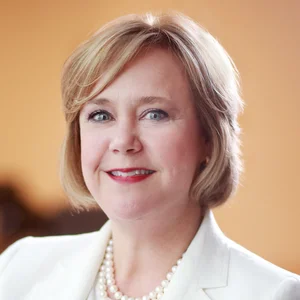
Wealth Is Dignity: Teresa Ghilarducci on America's Retirement Reckoning
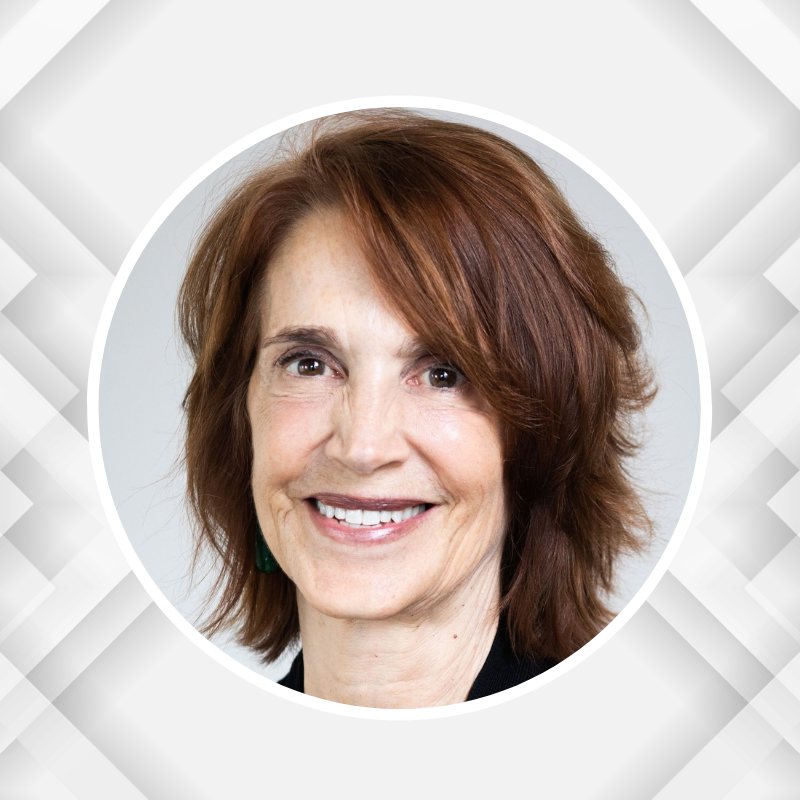
Teresa Ghilarducci, Bernard and Irene Schwartz Chair of Economic Policy Analysis at The New School for Social Research
One of the nation's sharpest minds on retirement security talks universal access, automatic enrollment, the new TrumpIRA executive order—and why she believes every worker deserves a deferred Saturday.
About Our Guest
Teresa Ghilarducci is a labor economist and one of the country's most recognized voices on retirement security. She holds the Bernard and Irene Schwartz Chair of Economic Policy Analysis at The New School for Social Research and directs the Schwartz Center for Economic Policy Analysis. Over four decades she has championed Guaranteed Retirement Accounts—a proposal The New York Times named one of the defining ideas of 2008—and has authored landmark books including Rescuing Retirement and her most recent, Work, Retire, Repeat: The Uncertainty of Retirement in the New Economy (University of Chicago Press, 2025). In 2021, she co-authored a landmark white paper with economist Kevin Hassett—now Director of the White House National Economic Council—proposing that all workers gain access to a retirement savings plan modeled after the federal Thrift Savings Plan. That paper laid the intellectual groundwork for the executive order President Trump signed on April 30, 2026.
Lisa Massena: Teresa, you've dedicated your life's work to retirement savings, access, and outcomes. Where do you see us today?
Teresa Ghilarducci: I've dedicated all of my life to this. I wrote my dissertation after I was hired by a couple of unions to help with their collective bargaining negotiations. That's when I got truly interested in negotiating pension plans—I was a graduate student at Berkeley, working with the labor center, and one of the unions that came to us happened to be my own mother's union. So, I helped negotiate her defined benefit plan, and also one at Stanford University.
I started my career helping improve defined benefit plans and creating defined contribution plans to sit on top of them. But it became clear pretty quickly that linking someone's retirement security to one or two employers was never going to be stable. People move. Work changes. So, I always looked ahead to a system that broke the link between the employer and someone's old-age security—while keeping the link between work and old-age security.
What I've come to understand is that people have to save at work while they're working, and that every person needs to have money flowing into their own retirement account alongside their Social Security contributions. You can depend on employers to pay you—that's how capitalism works. But depending on employers to carve out special retirement programs for their workers? That's just too unstable.
So, my recent work with Kevin Hassett—now at the White House—has built on that long-held vision: a universal pension system, advanced funded and sitting on top of Social Security, much like other countries have built and much like we imagined when Social Security was first passed. And right now, we are closer to that ideal than we have ever been before.
LM: You and Kevin Hassett did important work together on how to make retirement savings truly universal. Can you tell us more about that?
TG: Yes. The framework I've promoted for about 45 years is called Guaranteed Retirement Accounts. The main idea is that they would supplement Social Security and be advanced funded—meaning the money would be invested in financial markets so that much of what workers receive in retirement comes from market growth, not just their own wages. The math does the heavy lifting. The power of compound interest is what gives workers a real shot at a decent old age—or what I call paid time off.
That vision has evolved and landed on something called the Retirement Savings for Americans Act. It would set up a Worker Retirement Fund with multiple sources of money flowing in: individual contributions, government matching contributions, and even charitable donations. Every worker—whatever kind of employment they have—would be eligible to contribute, and they would each have their own account within that fund.
For lower-income workers—those earning below the median wage—the federal government would provide a match. It would be 1% of their compensation even if they contributed nothing, and up to matching 5% of their pay. So, a low-income worker who contributes 5% of their pay could have 10% of their compensation going into their account—with half coming from the government. That's what higher-income workers with good 401(k) plans already have. We're just extending it to everyone.
The idea is to get money into people's accounts so they can start experiencing the magic of compound interest—and to start moving people from the category of 'left out of the system' to 'participant in the system.' That's not just a financial shift. It's a dignity shift.
I remember my stepfather, who was a laborer. He had a finger cut off at work—a horrible accident—and eventually went on disability. But he never called his disability payment a disability payment. He called it his pension. And I realized how much it mattered that he'd earned it. He stood up taller. It changed his demeanor. The word isn't proud. It's dignified.
“The power of compound interest is what gives workers a real shot at a decent old age. Start at 25 and save 3%—along with Social Security—and you can maintain your lifestyle in retirement. Wait until 40 and you’ll need to save 15%. That’s the power we’re trying to unlock for everyone.”
Note: The Retirement Savings for Americans Act was most recently reintroduced in April 2025 by Representatives Lloyd Smucker and Terri Sewell and Senators John Hickenlooper and Thom Tillis. Learn more from the Economic Innovation Group.
LM: How essential is automatic enrollment to the outcomes you'd like to see?
TG: It's absolutely necessary. It's vital—just like automatic enrollment is vital to Social Security. Everybody loves their Social Security, but nobody would have signed up for it voluntarily. Even the things we love and would deeply regret not having, we often don't sign up for. That's just human nature.
So automatic enrollment has to happen, and opting out has to be genuinely difficult. Just as we've expanded Social Security over time to cover more and more workers—even a 15-year-old mowing lawns who earns above a certain threshold now has to be enrolled—we need universal automatic enrollment for retirement savings.
And really, we're not forcing people to do something they don't want to do. We're giving people the infrastructure to do what they already want to do. When you ask low-income workers—even union workers who are janitors or school aides or coal miners—they love that their employer has a retirement account. But they need the system to make it happen automatically, because the competition for their small dollar is real and urgent every month.
Kevin and I found in our research that the lowest-paid federal workers did not contribute to the Thrift Savings Plan until there was a match. Once there was a match, they gladly contributed. It wasn't that they didn't want to. It was that the system wasn't set up to help them.
Think about a 22-year-old. Retirement has no relevance to them—and it shouldn't have to. We don't ask them to think about their disability insurance or life insurance either, even though they benefit from both. We can't expect 22-year-olds to run mental spreadsheets on every liability they'll face across their lifetimes. We want systems that are automatic, fair, and ensure people are protected from the events we know they'll face.
LM: There's debate about whether a federal program or a federal standard works best. What do you think?
TG: What Louis Brandeis called 'laboratories of democracy'—the idea that states can innovate and road-test solutions for their citizens—is appealing from a market standpoint. We saw the New Deal draw from programs already piloted in Wisconsin, New York, and other states. And we've had 20 years to learn from state auto-IRA programs—I was deeply involved in the early work in California.
We've learned a lot. We know automatic enrollment matters. We know most people who stay in these accounts view them as retirement savings, not short-term emergency funds—though we've also found that when people are really strapped, they do tap these accounts rather than taking on high-interest debt, which is a legitimate function. We've learned that accumulations are modest, and that without employer contributions, tax deductions, or scale economies, the accounts won't be large enough to sustain a retirement on their own.
According to Pew Charitable Trusts research, roughly 56 million Americans still lack access to an employer-sponsored retirement plan at work. And about 26 million who qualify for the Saver's Match don't yet have an account in which to receive it.
Here's the issue: the regulatory and political divergence between states is growing. We're not seeing more innovation from the state laboratory anymore—we're seeing states drift further apart into camps of low-tax, low-regulation states and states experimenting with broader social programs. The value of state-level competition in this space may have already been extracted. It may be time for a federal solution, just as it was when Social Security lifted programs from Wisconsin and Minnesota into a national framework.
Is it possible to have an employment-based system with automatic enrollment that doesn't put burdens on employers? Yes. For workers who already have an employment relationship where employers contribute to a retirement plan, that relationship is valuable and should be preserved. But a large and growing part of our economy operates with high turnover, small businesses, and part-time or gig arrangements—employers who can't or won't offer complex benefit packages. That's a reality we have to design around.
LM: President Trump referenced retirement savings and matching contributions at the State of the Union in February. What would you like to see next?
TG: In the next five years, I would like to see everyone who is contributing to Social Security also contributing to their own retirement account. Just like that—as a matter of course, as part of the infrastructure of being a worker in America.
On April 30, 2026, President Trump signed an executive order directing the Treasury Department to establish TrumpIRA.gov, a marketplace where workers without employer-sponsored plans can find and enroll in low-cost private-sector IRAs—and, if eligible, receive the federal Saver's Match of up to $1,000 per year. The Saver's Match, which was passed during the Biden administration through the SECURE 2.0 Act, goes into effect in tax year 2027. This is a meaningful step. But it's a step.
The Saver's Match needs to be expanded. Under current rules, you need to earn roughly $20,000 to get the full benefit—it doesn't reach enough people who need retirement accounts. I'd like to see legislation that makes the program permanent, expands coverage, and allows more money to flow in from the government. And automatic enrollment is going to be the game changer. If enrollment is voluntary, take-up will be low. Research from Morningstar estimates that a federal auto-enrollment plan could bring roughly 32 million new savers into the system.
What I want people to understand is this: retirement is really just paid time off. For most of us, it's deferred paid time off. We are deferring our rest, our freedom, our Saturdays—into the future. The goal of this whole system is to make sure that deferred Saturday actually arrives with dignity.
“Retirement is really just paid time off — deferred paid time off. We’re all deferring our Saturdays into the future. The question is whether everyone gets to cash them in.”
LM: Bonus question — what haven't we talked about that we should be thinking about right now?
TG: My students have taught me to think about age justice. Letting people accumulate money in retirement accounts early in their careers—with government contributions—is partly going to help right a serious wrong: the growing gap in longevity between people who are well-resourced and people who are not.
It is unjust that many people cannot live a normal human lifespan. The longevity gap by socioeconomic class is growing. We already knew that Black Americans died younger than white Americans—and while there was some improvement for decades, Black longevity gains have largely flatlined since the 1990s. White women have seen little improvement in mortality either. There was one major exception for a long time: Hispanic Americans were living longer than their class position would have predicted, largely because of healthier eating habits brought from their home countries. That advantage has now largely disappeared, as their working and housing conditions have caught up with them.
The pandemic accelerated these trends. People living in dense housing conditions died faster and were far more susceptible to long COVID. The morbidity data from the Health and Retirement Survey tells a clear story: if you spend your career in physically demanding, subordinate jobs—with the chronic stress and elevated cortisol that comes with that—you are more likely to develop heart disease and metabolic disorders. Class differences in health are often class differences in the conditions of work.
Providing for people's old age is a step toward age justice. If you have some savings when you are forced out of the workforce—and most people don't retire voluntarily, they are pushed out—you can make a real transition. You can perhaps delay collecting Social Security and get a larger, inflation-protected benefit. You don't have to drain whatever small cushion you have. You don't get further behind.
The Trump plan and the RSAA will affect workers of color and people in precarious work most directly. By covering low-income workers, we're not just helping individuals who haven't been able to save—we're bringing whole groups into the system who have been structurally left out. In 50 years, I believe we'll look back and see how much this mattered.
The Bottom Line
The conversation with Teresa Ghilarducci is a reminder that retirement savings policy is not just about numbers—it's about dignity, agency, and who gets to live a full life. From her dissertation negotiating union pension plans at Berkeley to co-authoring the research that shaped a presidential executive order, she has spent four decades asking one question: how do we build a system where every worker gets to cash in their deferred Saturdays?
With TrumpIRA.gov set to launch in early 2027 alongside the Saver's Match, and bipartisan legislation moving in both chambers, the pieces are in motion. The open question, as Teresa makes clear, is whether automatic enrollment follows—because without it, we've built the door but left it up to people to walk through on their own.
References & Further Reading
Teresa Ghilarducci's website and research
Ghilarducci & Hassett, Inclusive Wealth Building Initiative White Paper (EIG, 2021)
Economic Innovation Group – Inclusive Wealth Building Initiative
Retirement Savings for Americans Act (RSAA) – summary and updates
Trump Executive Order: Promoting Retirement Savings Access (April 30, 2026)
CNBC: Trump signs executive order expanding retirement account access
Morningstar analysis: auto-enrollment could bring 32M new savers into the system
Pew Charitable Trusts – Retirement Savings Project
Work, Retire, Repeat: The Uncertainty of Retirement in the New Economy (Ghilarducci, 2025)