This Is a Moment: Peter Thompson on RetirePath Virginia
Virginia’s Auto IRA leader on a growing program, a big expansion, and a call to more states.
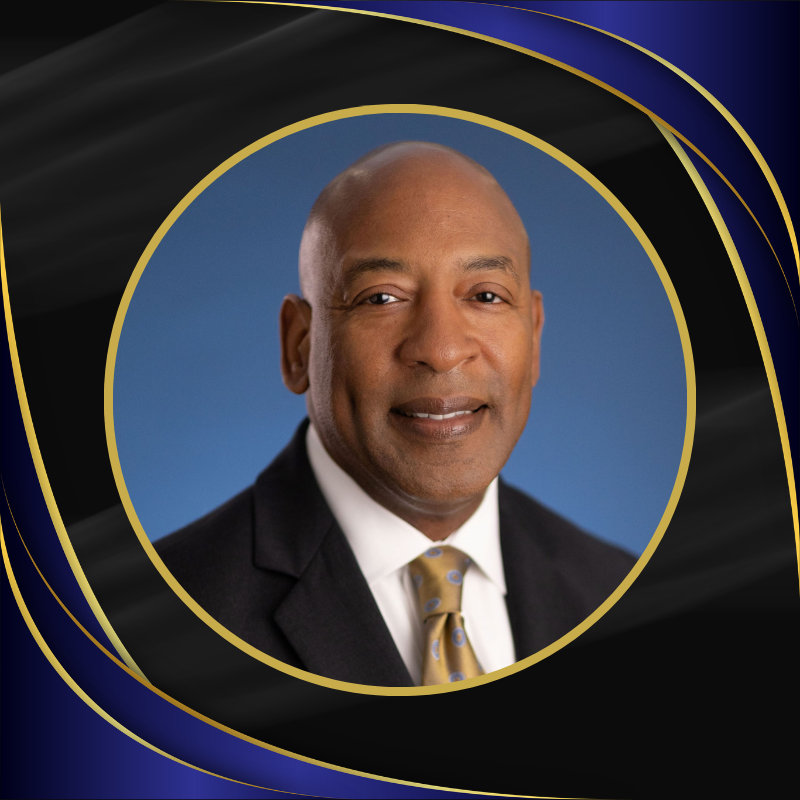
Peter Thompson has been with RetirePath Virginia since before it opened. He joined CEO Mary Morris and Commonwealth Savers Plan (formerly Virginia529) in 2021 from the Virginia Retirement System, where he helped run the state’s DC plans for public sector workers. Under his watch, RetirePath is expanding to provide real and meaningful retirement savings access to over a million previously uncovered private sector Virginians. What’s he learning? Let’s get to it!
Where RetirePath Stands Today
Peter, RetirePath still feels very new – give us some highlights – where are you today.
It’s great to be here! We talked in 2023 right after the program launched. RetirePath has and continues to be well received. The number of individuals saving in RetirePath tripled over the past two years. As of June 30, 2026, which is the end of our fiscal year, the program managed over 27,000 accounts holding more than $33 million in assets, compared to about 8,900 accounts and $4 million in 2024.
At the start RetirePath was limited to businesses with 25 or more employees who worked full time and did not already offer a retirement plan. With such a high worker threshold, we knew we were including more mature employers who might be just as likely to adopt a private-sector plan as they were to register and facilitate RetirePath.
We also knew we would not be reaching many of our uncovered employees who work for smaller businesses. But we had to prove that the core program worked, and worked well before we could aim higher. The first three years of the program gave us the data and experience we needed to go back to the Virginia General Assembly to expand the program. That said, we worked with legislators earlier this year to expand access for more Virginia small business owners and workers.
“Thousands of Virginia workers who don’t have a job-based retirement plan just got another step closer to more easily building lifetime financial security,” said Jim Dau, Virginia State Director at AARP.
As the overarching goal is to close the retirement access gap, we also see new private plan adoption as a Virginia success story. The Pew Charitable Trusts noted in an article earlier this year that new private plans comprised approximately 9.1% in Virginia from 2022 to 2023. Of course, this was prior to the program expansion that went into effect July 1 and although we don’t have any figures on new private plan adoption in the Commonwealth since then, it’s encouraging to know that small employers are taking action to close the savings gap and help their employees start to save for their future.
The 2026 Expansion: Five Employees, Part-Time Included
That’s awesome. Tell us about the expansion. Who are you covering now?
Effective July 1 of this year, RetirePath now includes businesses with five or more employees. We were also able to remove the hours-worked provision. So, the program now covers both full-time and part-time workers. That opens RetirePath up to more than 35,000 Virginia businesses.
We’re in the middle of the expansion now, rolling it out in phases. We just passed the September 30 registration deadline for businesses with 10 to 24 employees. For our smallest employers, those with five to nine employees, the registration deadline is coming up – it’s October 30.
We appreciate that we had unanimous, bipartisan support for the legislation. Legislators on both the House and Senate side supported the bill, and it moved through the General Assembly and was signed by the governor.
We’re really excited about the positive response we’re seeing from those smaller employers. It reaffirms that these programs really help the smallest of employers. It gives those businesses a retirement savings option to help their employees begin to save for their future.
You’re seeing good growth.
Yes – over the last year, we’ve grown the number of savers by 60%. Assets saved are up by 88%. We’re excited to bring this opportunity to more workers in the Commonwealth – and you can follow our growth here if you like.
Lessons for States – What We’re Learning
You started with something very good, showed it worked, grew it, and made it better. Any lessons learned that might help others as they consider a program?
One: Engage early and often
Stakeholder engagement, early and often, is key. That means within the state’s legislative body, with legislators at the state and federal level, employers and with industry stakeholders. By doing that, we were able to establish those relationships early and strengthen them over that two-year period. We continuously engaged with industry trade groups and business associations. We partnered with them to raise awareness and get the word out, and we listened and took their feedback.
Two: Get the legislation right
Another lesson is getting the enabling statute right. For Commonwealth Savers, our approach to drafting legislation is not to be too prescriptive in the language. However, when it comes to certain aspects of administering the program, more prescriptive language is helpful. An example for us has been the delegated authority other state entities need to execute enforcement for noncompliance. While we established in statute the cooperation of other state agencies in sharing data with us, we didn’t clearly designate another state entity that would assist with enforcement. On one hand, that’s been great, because we’ve been able to engage those state entities and have very informative and insightful conversations about best practices around developing and implementing an effective enforcement mechanism. On the other hand, there must be that delegated authority in statute and we still needed it. So, make sure you get the legislation right from the beginning.
Three: Stay on top of where things are headed
As we drafted amendments and prepared for this past legislative session, we also recognized and were mindful of how industry and federal legislation are moving.
In the past few years there has been a greater focus on emergency savings and financial literacy. As we saw with SECURE 2.0, several provisions were included that signal a push to provide workers with access to funds in the event they need them. By establishing a Roth IRA as the default account type, the auto-IRA program states have long recognized this balance between providing access to funds for immediate emergency situations and saving for retirement, particularly among workers who are likely saving for the first time. It’s really about understanding financial vulnerability.
The audience of savers in the state programs is primarily low- to moderate-income workers. As we think about financial education, emergency savings, and the tools and resources to help improve the financial stability of workers, we believe we can play a more supporting role. For us then, it is about having this level of forward-looking awareness.
With this perspective, we included a few new provisions this year as part of our effort to expand the program. We amended our statute to include language around federal matching contributions to eligible participants under the Saver’s Match Program and strengthened language around financial education. We also amended our statute to explore what an emergency savings vehicle may look like.
Naturally, there are challenges when action requires legislation. It takes time, that is for sure. And there is a lot of educational work along the way.
A Now and Future System
You said the magic word - Legislation. Retirement is having a moment. Peter, what would you like to see us tackle next?
Oh gosh, that’s the million-dollar question. At the state level, it would be great to see more states advance legislation to implement a state-sponsored retirement savings program to help their citizens. I think this is a moment.
Where we are in this moment, you only have 15 states that are active and open – yes, with two more launching soon. Earlier this year, the Trump administration issued its executive order for TrumpIRA.gov. Based on what we’ve seen in marketing and outreach around Trump Accounts for kids, if we see anything similar for TrumpIRA.gov, it will be useful. I think the executive order in and of itself presents a call to action to states. Now is the time to do something. I hope we begin to see states that don’t have a program move toward putting something in place.
“I think the executive order in and of itself presents a call to action to states. Now is the time to do something.”
The executive order sent a very big signal: this is important, and we are going to spend time, effort and money on it.
We were glad to see automatic enrollment find its way into Trump Accounts for kids. We don’t see the same path for TrumpIRA.gov, and that is where a state Auto IRA program has the extra capability. People are automatically enrolled and engaged out of their paycheck, saving quickly and easily. It goes that extra step and doesn’t have many of the friction points individual workers are likely to encounter with a voluntary marketplace solution.
We know portability is also on your mind.
Yes. In the past decade, we’ve had 15 state programs become active and open. In addition, we’ve seen PEPs or Pooled Employer Plans added to the retirement solutions landscape. SECURE 2.0 included more incentives to encourage small businesses to establish retirement plans. Add this to the mix of existing defined contribution plan solutions, all of them do not work well together.
How do we improve the retirement savings ecosystem so an individual can seamlessly move money from one plan or platform to another?
The ability to allow a saver to not only take their account with them but to move their funds between different types of plans in as frictionless a way as possible is the easy answer, whether it’s from a state-sponsored program to an employer-sponsored program, or from a pooled employer plan, back and forth, interchangeably, seamlessly. I think we’re in that moment too, where we really think through how to make retirement savings options truly portable.
When you think about the many jobs people have in a working career, you’re likely to end up with a whole bunch of tiny accounts. A $5,000 account looks nothing like a $50,000 or a $500,000 account where everything is in one place. It seems immaterial.
Exactly. That’s the point. We haven’t solved for that, but I think this is the moment. You look at advances in technology and some of the newer platform solutions, and there’s a case to be made for making benefits truly portable. Even with Roth IRAs, which 99% of our savers in these programs are in, today that money can’t be rolled over into an employer-sponsored plan.
You could think of it this way: maybe it’s got to come the other direction – to you and the IRA. Maybe that goes to your benefit in the long term. Or maybe we will solve this thorny challenge.
The Saver’s Match: A Chance to Re-Engage
The national and state levels are closely linked. The Saver’s Match is coming. What does it mean for RetirePath and Virginia’s working families?
I think the Saver’s Match, if it’s done successfully, will really help boost savings for low to moderate income workers. I think it has the potential to improve retirement savings outcomes for millions of American workers. It’s a huge lift and a lot of folks are working behind the scenes to make sure this is done right.
Here in Virginia, we’ve been engaged with Treasury and IRS staff. We’re participating in conversations with other industry stakeholders about outreach and education and what that looks like for employers and employees in RetirePath.
Recently, Treasury started sending Saver’s Match awareness letters to savers who either claimed the Saver’s Credit or were eligible to claim it in 2025. That number included just over a million taxpayers in Virginia.
This gives us at Commonwealth Savers a chance to start communicating with savers about the importance of saving, and to position the Saver’s Match as an added benefit. Start early. Save consistently over time. Payroll deduction allows an individual to do that if they’re participating through their employer.
And it’s not just the message, it’s the audience. Think about this: each state has many workers who opted out the first time around (new programs, personal circumstances, and more) that are potential future savers. How do we re-engage those folks? Our statute now allows for re-enrollment. We haven’t decided what that looks like. But if there’s a way to re-engage people who opted out, or who left their employer and stopped contributing, the Saver’s Match magnifies the opportunity to re-engage these folks and encourage them to start saving.
Georgetown tells us your average saver is contributing about $1,800 a year, very close to the $2,000 that earns the maximum federal Saver’s Match. That’s a fantastic place to be.
Yes – the potential for folks saving consistently through 2027 to get a full match is absolutely there.
Along those lines, we know that Virginia is one of over two dozen states that have a minimum wage above the federal level. If you do the back-of-the-napkin math, someone making $12 or $13 an hour and working full time is above the income limit to receive the full match if they’re single. The match tapers from there.
Whatever we can do through outreach and education to raise awareness and inform taxpayers about the new provision, that’s really what we want to do.
There will be a moment in 2028, as people receive matching funds in their accounts, to really celebrate and share some stories.
Agreed - that can motivate people to save even more, with more savers, more new accounts, more savings, as they see it happening. When you look at average account balances in the Auto IRA programs, or for new savers, the federal matching contribution can help boost savings over time.
And for us, going into 2027, we really want to lean into educating our savers about just getting started, the importance of saving, and how RetirePath is an option that lets them do just that.
“How do we get them to a place where they not only see the programs as an opportunity to save, but, I think more importantly, as a trusted partner?”
Bonus Round: The trusted partner
Peter, what else is percolating for you in 2026?
I’ve been thinking about the issue of affordability and financial vulnerability.
Affordability is the hot button issue now. There’s also this debate around a living wage. You know as well as I do, research shows that the higher a person’s income, the more likely they are to save.
For me this goes back to the financial vulnerability question I touched on.
For the state programs, I think it means effectively thinking through and putting in place relevant tools and resources –ones that can help improve the financial security of workers. Although we can’t solve the wage or income issue, we see tools that support the chance to save for the future by adding the cushion of available short-term savings. I think here we can consider exploring something like an automated emergency savings capability.
I’m also thinking about the importance of financial education. Regardless of which side of the fence you’re on about whether financial education leads to better savings outcomes, I think the appropriate tools and resources around financial education and financial literacy matter.
Often, financial education isn’t linked to actual money going anywhere.
I’ve heard this: you can talk to me about how to ride a bike all day long. Until I get on the bike and try to ride it, nothing you said means anything to me.
The state Auto IRAs are in this unique place where people are getting on the bike now. You have something to share with them that is very timely and very meaningful.
Technology is changing. That may make it easier to do relevant, point-in-time interventions with usable information.
I agree. We do hear the comments, “Well, if you engage folks, they’re likely to take their money out.” I want to debunk that. I think there are certain segments of the saver population who are already engaged and perhaps are seeking more relevant and timely information to help them make better financial decisions.
We are thinking deeply about how we engage participants in meaningful, useful ways. We are considering the importance of providing tools and resources folks need to keep saving for their future. These include those that build their knowledge and awareness of saving in a retirement vehicle, but also help across other areas: managing finances, budgeting, buying a home, paying off debt, whatever the case may be.
We’re in a unique position. They’re already on the bike.
So how do we keep them engaged, and how do we get them to a place where they not only see the programs as an opportunity to save, but more importantly, as a trusted partner? A state government entity as a trusted partner in helping you to secure your financial future – imagine that.
We love it. Peter – thank you for your terrific perspective and insights. Much success to you and RetirePath Virginia as you round the corner on 2026 into 2027!