
Getting In Is Just the Beginning
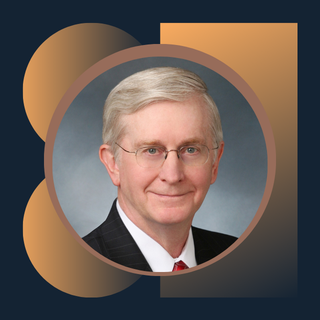
Jack VanDerhei of Morningstar's Center for Retirement and Policy Studies on the Saver's Match, federal auto-enrollment, and the design choices that could make — or break — a federal retirement savings program.
Jack VanDerhei on access, accumulation, and what the data says about making a federal retirement plan actually work
Jack VanDerhei has spent more than three decades building the models that help policymakers understand what retirement policy actually does — not what it promises. As Director of Retirement Studies at the Morningstar Center for Retirement and Policy Studies, he brings the same rigorous, real-world simulation work he pioneered during 33 years at the Employee Benefit Research Institute (EBRI), where he led some of the most cited research on 401(k) plan design, leakage, and retirement income adequacy in the field. His current work – co-authored with Spencer Look, FSA, Associate Director of Retirement Studies at Morningstar Retirement -- uses the Morningstar Model of U.S. Retirement Outcomes to stress-test policy proposals against actual human behavior — opt-outs, job changes, cash-outs, and more.
We sat down with Jack to talk through this new simulation of universal retirement plan coverage and what it reveals about the choices policymakers will face as federal universal retirement savings concepts come into focus.
QUESTION 1
What did the simulation tell you about a federal retirement savings proposal — including a $1,000 matching contribution — and what workers could gain?
Before we get to the findings, let me set the stage for what we actually modeled, because this is not the Trump proposal specifically. Honestly, the details of that are still being worked out. What we did was build a generic federal retirement savings framework — a Roth account — and then run a series of scenarios, adding bells and whistles one at a time to see what moves the needle.
The account covers workers without an employer-sponsored defined contribution plan or a state auto-IRA. We tested both voluntary and automatic enrollment. We modeled three contribution defaults: a straight 3%, a straight 6%, and a 3% that auto-escalates to 6% at 1% per year. And we used the Saver's Match as the matching vehicle, then tested two enhancements: locking match funds until age 62, and expanding the eligible population by modifying income requirements while doubling the match to roughly $2,000.
Critically, all the messy real-world behavior is baked in — opt-outs, withdrawals, cash-outs, job changes, leakage. We are not producing a best-case scenario. We look at retirement wealth at age 65 and also model the first 10 years, because that's the standard federal budget scoring window.
RSM: So what's the headline finding?
Jack VanDerhei: The big takeaway — and I can't stress this enough — is that access matters enormously. We've known this for decades, but the numbers here make it concrete. A federal auto-enrollment approach could cover about 32 million currently uncovered workers. Over 10 years, depending on the design choices, we're looking at anywhere from $635 billion to $983 billion in additional retirement wealth. That's real money. But here's the thing: the match alone is not going to be enough. You have to make sure people stay in the program long enough for it to make a difference.
RSM: What does the match actually do on its own?
Jack VanDerhei: The match works. There's no getting around that. But it's best when you pair it with strong program design. If you have auto-enrollment at a 3% default, you get about a 28% increase in retirement wealth at age 65 for the affected population. Jump the default to 6%, and that goes up to 49% — a significant difference. If you also protect the match funds until age 62, the 28 goes to 35 and the 49 goes to 56. Locking it up helps, but not as much as getting people in at the right level in the first place.
QUESTION 2
Automatic enrollment isn't guaranteed in current proposals. What does the data say about leaving it out?
This is where it gets stark. Let me give you two numbers, holding the contribution rate constant at 3% so we're comparing apples to apples.
Jack VanDerhei: Under automatic enrollment at 3%, we see a 28% increase in retirement wealth at age 65. Switch to voluntary enrollment at the same 3%, and that drops all the way to 13%. So automatic enrollment more than doubles the retirement wealth increase for this group. And the reasons are pretty obvious. If you're an uncovered worker, you're more likely to have limited income, more likely to face inertia, more complexity in your life, and — everyone's favorite — you don't have easy payroll-based saving happening automatically right now.
RSM: So it's not just a preference question — it's a structural one.
Jack VanDerhei: Exactly. It's not happening at point of pay in an automatic way for these workers. Going from voluntary to automatic enrollment at 3% more than doubles the benefit. That's not a small design detail. That's a core driver.
QUESTION 3
Your simulation shows that how long workers stay in a plan matters even more than how they get in. Say more.
This is the finding we think surprises people the most.
Jack VanDerhei: Part of it is just compounding over time — that's the obvious piece. But the less obvious piece is continuity. What happens if you're not in for a long stretch? Job changes, cash-outs, gaps in coverage — these erode the benefit significantly. Let me give you the numbers. At 3% auto-enrollment, workers who've been in the program for one to nine years see about a 16% increase in retirement wealth. Workers who've been in for ten years or more? That 16 jumps all the way to 67%. Getting in alone is nice. Getting in and staying in matters a whole lot more.
RSM: What happens if you raise the default to 6%?
Jack VanDerhei: The gap gets even bigger. At 6%, one to nine years gives you a 25% increase. But ten years or more at 6%? The increase is 125%. To be clear – we are talking about a 125% increase in projected retirement wealth relative to the baseline scenario. That's when you really start to see the Saver's Match working the way it's meant to.
RSM: If I'm a policymaker trying to address this — these are behavioral outcomes, life events, things outside a program's control — what lever do I pull?
Jack VanDerhei: One of the most direct levers is locking up the match portion until age 62. Workers can always access their own contributions — it's a Roth, so that's theirs. But if you restrict the matching funds, you're creating an incentive to stay engaged with the account rather than cashing out when life gets hard. Just that one modification moves the wealth outcomes meaningfully — from 49% to 56% under the 6% auto-enrollment scenario.
RSM: That's interesting, because it's similar to how Trump Accounts handle the government contribution — locked until the child turns 18. Nobody argues about that.
Jack VanDerhei: Right. It's extra money, above and beyond what someone would have on their own. And locking the match in a federal retirement account could also resolve a design question that comes up a lot: whether match funds going into a Roth IRA create a premature access problem. If the match is locked until 62, you've addressed that concern — and the Roth structure works cleanly for the employee's own contributions.
“Getting in alone is nice. Getting in and staying in matters a whole lot more — and the numbers prove it.”
QUESTION 4
Your earlier research flagged the risk that a federal program could crowd out existing private-sector plans. Does that concern still apply?
Jack has studied this dynamic carefully, particularly in the context of the Retirement Savings for Americans Act (RSAA), a recent federal proposal. As a note, this specific plan-level market drop finding comes from a 2024 RSAA-specific modeling framework and should not be mechanically applied to the generic federal retirement savings framework modeled here.
Jack VanDerhei: It really depends on the design. With RSAA, the concern was real and granular. If you're an employer and find that the vast majority of your current 401(k) participants would receive a relatively significant contribution under RSAA, there's a financial incentive to look at dropping your plan — those workers might actually receive more matching funds and come out ahead. For plans with predominantly low-wage workers, that math could make the 401(k) look optional. We found a significant percentage of plans in that situation under our modeling.
RSM: So under the current administration's approach — which is more limited than RSAA — does that risk come down?
Jack VanDerhei: I won't say there's no risk, because I genuinely don't know exactly what the final design will look like. In fact, we’ve modeled something that is independent of any specific proposal in order to test generic policy levers. Generally speaking, the probability of an employer with a predominantly low-income workforce scrapping their 401(k) plan is likely to be low. For example, the bare-bones outline we've seen recently doesn't appear to create the same financial incentive to drop existing plans. The real question is always: which system would these low-income employees be better off in — the 401(k) or the federal option? That analysis has to happen at the plan level, and it's going to vary.
QUESTION 5
State auto-IRA programs have enrolled more than a million workers who have saved over $3 billion. Are they complements to a federal program — or headed for conflict?
Jack VanDerhei: I do not necessarily view federal and state approaches as competitors. There's certainly every possibility in the world for this to be complementary, technically speaking.
One consideration -- I've been hearing since the Obama administration that a federal auto-IRA is needed because of multi-state employers — the patchwork problem. But here's a thought that doesn't get enough attention: a general federal standard that establishes uniformity might be just as useful. Maybe more so.
RSM: Can you say more about what that fork in the road looks like?
Jack VanDerhei: One path is a federal program — something like a Thrift Savings Plan for everybody. You create a parallel system and give access to workers who can't get it from an employer plan. The other path is a federal standard: as an employer, here's what you have to do. And here are your options — use the private market and all the forms of defined contribution plans, facilitate your state's auto-IRA program, or do something else to fill the gap for states that haven't established one. Without a doubt, that fork is real. And which path gets taken will shape how the state programs fit into the picture.
BONUS QUESTION
What haven't we asked that we should be thinking about right now?
Jack VanDerhei: There's so much focus on increasing head counts through access — and that's right. But not enough attention is being paid to the workers who are already covered. For low- and moderate-income workers who are currently in a plan, the Saver's Match is potentially a big deal. But who's going to tell them about it? Will employers go out there and actively promote the Saver's Match? How are people going to be informed? That communication and engagement piece — that's the thing nobody's talking about, and it could determine whether this benefit reaches the people it's designed for.
The full simulation co-authored by Jack VanDerhei and Spencer Look, Access, Auto-Enrollment, and Accumulation: A Simulation of Universal Retirement Plan Coverage is published by the Morningstar Center for Retirement and Policy Studies.
Jack's broader body of work can be found at morningstar.com/people/jack-vanderhei.
We include these disclosures at the request of Morningstar: ©2026 Morningstar Investment Management LLC. All Rights Reserved. The Morningstar name and logo are registered marks of Morningstar, Inc. Morningstar Retirement offers research- and technology-driven products and services to individuals, workplace retirement plans, and other industry players. Associated advisory services are provided by Morningstar Investment Management LLC, a registered investment adviser and subsidiary of Morningstar, Inc.
The information contained in this document is the proprietary material of Morningstar. Reproduction, transcription, or other use, by any means, in whole or in part, without the prior written consent of Morningstar, is prohibited. Opinions expressed are as of the current date; such opinions are subject to change without notice. Morningstar or its subsidiaries shall not be responsible for any trading decisions, damages, or other losses resulting from, or related to, the information, data, analyses or opinions or their use.
This commentary is for informational purposes only. The information, data, analyses, and opinions presented herein do not constitute investment advice, are provided solely for informational purposes and therefore are not an offer to buy or sell a security. Please note that references to specific securities or other investment options within this piece should not be considered an offer (as defined by the Securities and Exchange Act) to purchase or sell that specific investment. The performance data shown represents past performance. Past performance does not guarantee future results. This commentary contains certain forward-looking statements. We use words such as “expects”, “anticipates”, “believes”, “estimates”, “forecasts”, and similar expressions to identify forward-looking statements. Such forward-looking statements involve known and unknown risks, uncertainties and other factors which may cause the actual results to differ materially and/or substantially from any future results, performance or achievements expressed or implied by those projected in the forward-looking statements for any reason.