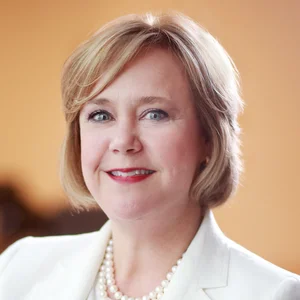
David John on Auto IRA Plus: The Next Generation of Retirement Savings Access

David John, Senior Strategic Policy Advisor, AARP's Public Policy Institute
A conversation with the AARP Senior Strategic Policy Advisor who co-created Auto IRA
Twenty years ago, David John and Mark Iwry stood before an audience at the Heritage Foundation in Washington, D.C., and presented a concept that would become one of the most successful bipartisan retirement policy initiatives in recent history: the Auto IRA. The idea was simple but transformative—automatically enroll workers without employer-sponsored retirement plans into payroll-deduction IRAs. What seemed like a straightforward solution has since become a reality in 17 states, with 14 programs now live, serving over 1.1 million accounts and managing $2.7 billion in retirement savings.
As Senior Strategic Policy Advisor at AARP's Public Policy Institute, David John has spent decades working at the intersection of retirement security and public policy. His career spans work at both the Heritage Foundation, the Brookings Institution, and AARP, embodying the kind of bipartisan approach that has made Auto IRA a success. Beyond retirement savings access, he has been instrumental in developing other retirement savings improvements, emergency savings policy, and financial wellness initiatives that recognize the diverse needs of American workers.
Now, David is introducing the next evolution: Auto IRA Plus. This framework would establish federal standards for state Auto IRA programs while preserving state flexibility, creating a pathway to universal retirement savings coverage. In this conversation, we explore how Auto IRA Plus builds on proven success, what legislative steps are needed, and David's vision for retirement security in 2026 and beyond.
Key Takeaways
Auto IRA Plus would establish federal standards for state programs while allowing states to exceed minimums and maintain flexibility in implementation.
The framework addresses critical gaps including asset test reforms, account portability, and Roth IRA to Roth 401(k) transfers.
States without programs could partner with existing state programs rather than building from scratch.
The Saver's Match is essential for moderate-income workers, with approximately 80% of Auto IRA participants eligible under current design.
Financial wellness programs must evolve to meet workers where they are—on mobile devices, through text and video, with content addressing debt and basic savings for lower-income workers versus planning tools for higher earners.
Key Takeaways
Lisa Massena: David, you've been working on retirement savings access for a long time—with great success in key areas, like Auto IRA. Seventeen state programs are now enabled, 14 are live, with $2.7 billion saved in over 1.1 million accounts. What do you think about where we are today?
David John: I'm thrilled! Our retirement system continues to improve and get better at serving American workers. The Auto IRAs have been an idea that's worked. We've seen a meaningful expansion in retirement account coverage and use. We see that folks who for a long time did not have access to savings at work now do, and that they appreciate it.
This particular idea has been 20 years in the making. It was on February 14, 2006, that Mark Iwry and I presented the concept of Auto IRA at a Heritage Foundation event in Washington, D.C. People were astounded that we were working so well together on what became a strongly bipartisan idea. Except for one naysayer in the back of the room, the idea was very well received. After this, Mark and I made the rounds of the Congressional offices. People would invite us in because they wanted to see bipartisan agreement in action. To emphasize how close our thinking was, in public events and hearings, one of us would begin a sentence and the other one would finish it—a bit of a vaudeville act, to be certain. And here we are, 20 years later, with live programs in a third of the states and many more under way.
“An idea in Washington is like a fine wine. It has to age for a significant period of time before people will start to really take it seriously.”
Introducing Auto IRA Plus
Lisa Massena: We've still got some gaps in coverage—and you've got an idea called Auto IRA Plus that could be useful. What is Auto IRA Plus?
David John: What is Auto IRA Plus? It's the next generation. We know we have 33 states that, for a range of reasons, have not yet authorized an Auto IRA program, even though they work well.
How can we get folks covered while leveraging what we see works, and keeping things consistent and simple? Under Auto IRA Plus, Congress would set basic standards and a requirement that employers above a certain size would offer access to either an Auto IRA, or a qualified retirement plan. (see the full white paper, here)
The states would maintain or establish programs like they've already done. 17 states have programs, more are on the way, and remaining states could start their own program, or allow an existing program to come in and service their workers.
Saying it very simply, we take the existing model and extend it to the rest of US workers in a way that is efficient, cost effective, and that allows states to work closely together – as they have done in this space from the beginning. At the same time we avoid creating large-scale expensive federal programs.
Our research also looks at a variety of other questions, one of which was sparked by a discussion I had with someone who was opposed to the Auto IRA. He immediately pointed out, well, that's all very nice, but the people who need the Auto IRA most are most likely to get hit by asset tests for state benefit programs. So along with the discussion of structuring a state system to meet the need for universal coverage, I also looked at a variety of other reforms necessary to make the structure work better. This includes changing asset tests, something that food stamps did years ago, so that most retirement assets are not counted.
It also includes things like making it easier to move from one type of account to another. This includes finally removing the barriers from moving a Roth IRA—the kind used in Auto IRA state programs—into a Roth 401(k).
The paper has a lot of different pieces, but the bottom line is that we can create universal coverage through a system that already exists and that already works, rather than necessarily going through and pushing existing things aside and starting over.
Fitting Into the Existing System
Lisa Massena: You have a way of coming up with ideas that are adjacent to those that exist, but different and productive. We've seen some excellent successes. So how do you see this concept fitting into the existing retirement system?
David John: The fact is that it's neither desirable nor practical to sweep everything that exists today off to the side and start over again. It would be expensive, and frankly, there would be a lot of credibility in the retirement system that would be lost by doing that.
With the state Auto IRA systems, we have pretty definite proof now that they meet the needs of the people who are least likely to have a retirement plan at work. These are typically smaller businesses, people who have moderate incomes and who may not benefit as much from a 401(k) at this stage of their careers as other people might.
In addition, we also know that a significant number of employers, when they are given a choice—you must either offer your own retirement plan of some type or join the state Auto IRA program—choose to start a 401(k) or something similar. You may have noticed there are some new providers that are actually making that easier and cheaper.
What Auto IRA Plus does is to fill in the gap, rather than anything else. And it moves toward a unified system that builds on what we have, improves it, and increases the ability of individuals to start saving earlier in their career and to continue on throughout.
The Path to Legislation
Lisa Massena: We'll need legislation to get to Auto IRA Plus. What do we need to do, and who needs to do it?
David John: Well, we actually need to move on two different levels. First off, the more Auto IRA state programs that are out there, the more Congress will recognize that this is a useful and practical feature of the retirement system. So, the work to increase the number of states that are opening or creating a state Auto IRA needs to continue first and foremost.
Then we also need to have a serious discussion in Congress and with the administration to help them to recognize that this is a viable alternative to starting a national program—that this actually can work.
It’s important to know that it also includes elements of the other alternatives currently proposed. But this is a much less disruptive way of improving coverage than anything else, and it’s probably a swifter alternative, too.
I mean, 20 years ago, when Mark and I first created the initial version of the Auto IRA, we were absolutely convinced that we were going to have a bipartisan solution that would be passed within just a very few years. And it turns out that an idea in Washington is like a fine wine. It has to age for a significant period of time before people start to take it seriously.
Comparing Alternative Approaches
Lisa Massena: To that point of a less disruptive, viable, and in some ways proven concept—there are a number of other proposals out there that would create a whole new federal-level program, not a standard, but a program. How would you compare this concept of Auto IRA Plus to some of the ones that are currently proposed and currently taken the most seriously?
David John: We have two major approaches. There is Mr. Neal's approach, and Mr. Neal has been a consistent supporter of the original Auto IRA since 2006 and has done some incredible work with that. The Neal approach sets up a basic way of dealing with coverage, but by having a number of individual, private Auto IRA choices, you're likely to have higher costs, because each provider is going to need to meet their cost structure and make a profit on this, and it's going to be a much more fragmented system.
The state programs actually deal with that, since they have a uniform contract with providers done by public bidding that keeps the costs low and the choices fairly simple.
The other alternative is creating a federal program. Having been involved slightly with the creation of backup programs in the UK (see UK NEST) and studying what's going on in Ireland and similar countries, that is extensive and expensive and frankly, conflicts with the existing system because the proposal doesn't effectively link with large elements of the existing system. Rather, it creates a separate channel, which is inevitably going to compete with it.
It makes much more sense to take and improve what we've got, and these state programs, as we've already discussed, do that fairly effectively. They are very, very helpful.
Federal Standards and State Flexibility
Lisa Massena: David, you've mentioned some elements that are critical for any legislation to have—including minimum standards for state Auto IRA programs. You also consider how states without an existing Auto IRA program might decide to set one up, and how it would be handled if they decided not to set up a program. You also talk about costs for states and federally. Can you hit a couple of your thoughts from across those topics?
David John: Yeah, the standards, as the paper discusses, are pretty simple and pretty basic. You want a state to be able to adjust the basic model to meet the specifics of its economy and its political structure, and that includes, for instance, if the federal standard is 10 employees or more, which is what the Neal Bill has done since the beginning. But certain states—California and Oregon specifically—have already covered all employees.
The states that want a broader coverage standard should be allowed to have one. In other words, the federal standard on the coverage issue is the minimum baseline. But if a state decides to do more, the state should be allowed to do it. In creating and implementing national standards, it's going to be an interesting matter of balancing flexibility on one hand with a basic structure that is guaranteed to meet the needs of the people who are not currently covered.
Lisa Massena: Connected to that, one of the things you point out is the very large number of people who work for an employer that employs 25 or fewer, or 10 or fewer workers.
David John: Well, and it goes beyond that. The fact is that small businesses come and go on a regular basis. One of the problems that we see in the existing structure, even when people do have a retirement plan, is that when they move jobs, they may be encouraged to cash out. Or if they didn't cash out, and their employer has gone out of business, and the provider that the employer used has been merged three or four times—finding that lost money can be very difficult.
So especially with small businesses and employees, the fact that they can use a state structure where the individual can move from employer to employer and keep the same account rather than losing it or having trouble finding it matters a lot.
For employers, the fact that you have something that is fairly simple for an employer to implement—because the question that often comes up is: well, having a retirement plan is complex, and I run a garage, or I run an antique shop—I am not a financial expert. I know antiques or car repair, but I don't know investments or plan management. Having that handled by someone else makes perfect sense.
“It’s neither desirable nor practical to sweep everything that exists today off to the side and start over again. What this does is fill in the gap and move towards a unified system that builds on what we have.”
Options for States Without Programs
Lisa Massena: Many states have started programs. There are also many states working on drafting and implementing legislation today, but it's unlikely to be 50. What are your thoughts there?
David John: My thoughts are actually twofold. One is that a state that doesn’t want to start a program has the option of allowing another state's program to serve their workers. So hypothetically, a state could decide: this is not something we want to do, so our workers can be served by one of the existing programs, and we’ll choose one of them to serve our state as well. This would be a variation on what we see this today through the Partnership for a Dignified Retirement hosted by Colorado, and the new partnership with Rhode Island developed by Connecticut. But rather than starting their own state program, the new state would essentially open their borders to an existing state program.
Another alternative, which is frankly less attractive in the long run, is that all employers in a state that does not want to start a program could be allowed to choose a state program to serve their workers from those that already exist. This is where the basic standards come in, because you don't want the ability to drive to something that really doesn't meet the needs of employees or employers.
Now, one of the things that is valuable about the state programs and that is worth considering over a federal program, is that it is much easier for a state with its database of taxes and permits and things like that to judge whether or not a small business is meeting the requirement than it is if you push that compliance responsibility to Washington. Imagine you might have an expanded federal workforce that somehow or other has to figure out that the garage down the street actually isn't offering its 15 employees a retirement program.
In the case of a state that chooses not to establish its own program, it must, however, then open its records to the program serving its workers to make sure that the requirement is being met.
Compliance and Federal Funding
Lisa Massena:.Yes – Compliance is one of the concerns we hear expressed. Where would compliance and enforcement live in a system with a federal standard?
David John: So far, we have seen that the state compliance approaches work fairly well, but there could be a federal requirement that states enforce at certain levels.
Lisa Massena: In the process of thinking this through, is there an opportunity for federal-level compliance activity if that needs to happen?
David John: Yes, absolutely.
Lisa Massena: And we're talking here about a federal program. As you note, most federal programs administered by states, of which there are many, include some level of federal funding to offset the cost and national benefit of that sort of a program. We haven't seen that yet, right?
David John: We have not seen that yet, no, not in any real form, but it would be useful actually. It would be useful both for the new states to help implement their programs, and for the existing states to—if they have borrowed from their treasuries to establish a program—be able to pay that back, or to expand or enhance their existing program.
So, yes, that would be desirable, possibly not essential, but definitely a positive feature.
Lisa Massena: And there are a lot of taxpayer dollars at stake. Am I right? If we don't do anything to change the system, we're going to spend the money anyway.
David John: Absolutely. Study after study has looked at the potential cost of doing nothing. AARP did one a number of years ago. Pew has done an excellent one. Georgetown has done one. The state of Pennsylvania did a really excellent study. We have definite proof that this is a problem that needs to be solved or it's going to make it much more expensive for governments at all levels to deal with a number of under-resourced retirees.
Lisa Massena: Unnecessarily under-resourced. But the first step is you have to have universal access for a successful retirement program.
David John: We've got information about that across the world. But then you also have to have portability, so that people who move from employer to employer, regardless of their age, income level, or type of profession keep their assets growing and avoid leakage and disruption.
—And last but not least, there is the universal question that we're seeing in retirement savings plans across the world: what happens when you retire—how do you deal with that?
There are a number of very interesting ideas being developed, and new products appearing regularly. However, we still have not answered this question in a way that is simple and easy for a new retiree to deal with. We still live in a world where when you reach retirement, the expectation is that you're going to do this financial plan that is incredibly detailed and sensitive to changing assumptions, and you'll rework that financial plan every year.
That's just not realistic. So, we've got a lot of work to do.
Lisa Massena: That's the paycheck for life concern that is, as you mentioned, universal across all types of DC plans. It's nice to think about a solution that could work elegantly once you hit that decumulation phase.
The Critical Role of the Saver's Match
Lisa Massena: From a 2026 perspective, and from the standpoint of access and use, how are you thinking about the Saver's Match?
David John: Oh, I think the Saver's Match is essential, really. I mean, the Saver's Match is more than anything else going to have a serious impact on the ability of moderate-income individuals to have enough money to supplement their Social Security. I think it would be a terrible outcome if it's postponed, and I'm hoping not to see that.
I also would like to see it extended so that a Roth account saver can receive the Saver's Match, and that could be handled in a variety of different ways.
The state programs all use a Roth IRA. Currently, the Saver's Match is structured so that the money would have to go into a traditional account, and the reason is to recapture some of the cost of it over time. Our paper discusses how to handle the Saver's Match and how to make the Saver's Match more valuable to a state program saver as well as others.
Lisa Massena: This is a very seat-of-the-pants estimate, but it seems to me that about 80% of the folks that are likely to be covered by Auto IRAs are also the folks who are eligible for Saver's Match as it's designed today. So, it certainly seems like an intersection you want to make sure works.
David John: Well, exactly.
Looking Ahead: 2026 Priorities
Lisa Massena: Tell us about your focus in 2026 and what you'd like to see us accomplish this year.
David John: Oh, I'd like to see universal coverage, universal portability, and a nice solution for retirement income.
Now, being realistic for a moment, I would like to see more movement in states. In particular I’m thinking of states that have not seriously considered a state program before.
I would also like to see further discussion at a federal level of what immediate steps can be taken to improve the retirement system for, especially, moderate-income workers.
I think that would be an excellent outcome for the year, with hopefully something more substantial being considered in Congress in 2027, 2028, something along that line.
We need steady progress towards making this system work better.
Emergency Savings and Financial Wellness
Lisa Massena: David, we covered many things. What have we not touched on?
David John: You know, the one side issue which keeps coming up, and I think it's especially important for Auto IRA-level savers, is the question of financial wellness and emergency savings.
AARP did a survey in 2018 about what workers want in an emergency savings program.
An emergency savings program doesn't need to be attached to a retirement program, but it's useful to have one that's adjacent to it, because it reduces leakage, and, frankly, gives people the ability to have a more stable financial life before retirement.
AARP is about to release a redo of the 2018 survey, and it shows a very strong interest. It shows why people need it and what people want,
We also have a second series of studies coming out on financial wellness—these are done with DCIIA RRC. Did you know—financial wellness benefits for the most part are aimed at financial planning, and they don't necessarily meet the needs or the accessibility of the people who need them the most.
We found that there are two different groups. There is an upper-income group that wants to use financial wellness benefits to plan their future, and that's what most financial wellness benefits are structured to do. We found there is a separate group, and these are people who have lower incomes and perhaps a more unstable financial life, and what they want is information about how to deal with debt, how to save and things like that. And the two groups really don't intersect all that much.
The study also shows that many financial wellness benefits are aimed at people who work at a desk or using a laptop, and a significant portion of the American workforce doesn't fit that mode. They’re often working at a construction site or a factory or retail or some other profession where they're not sitting at a desk. These folks need information that’s presented on your phone, and you need to be able to access it after work hours—essentially, anytime.
And then we're looking at: well, how do you want a financial wellness program to communicate with you. This is intriguing to me. Part of this is in the study, and part of it is something that I found after the study: older people want email, and younger people want texting. Folks want texts, and they want short instructional videos.
Interestingly, when I talk to state treasurers about this, the first reaction is often—well, wow, does that mean that we need a studio or something? And the answer is: no, you just hold your phone out and do a short, quick video. Megan, our college daughter, says it best: well, Dad, you old people email back and forth, but people my age, we text.
Going forward, programs are going to need to communicate as the different age and income groups want to be communicated with, rather than putting themselves in some standardized format. This research is coming out shortly.
Lisa Massena: Fascinating. So obviously the headline is going to be 'TikTok and Text!' Often today we do get to choose our mode: email, phone call, text. That choice feels more accessible in general.
David John: Yes, very definitely. This is going to continue to evolve. So, to me, the mistake is—and I think this is true universally about the retirement system—to say: well, this works, so therefore we're going to encase it in cement, and that's going to be the way it's done perpetually.
Lisa Massena: Nimbleness counts!